
Summer Spotlight: Early Exposure to the Full Hospital Environment Builds Healthcare Career Pathways
A central goal of IHA’s Healthcare Education Consortium is to strengthen the regional healthcare workforce pipeline by providing students with early, meaningful exposure to the full range of hospital careers, both clinical and non-clinical. By connecting classroom learning with real-world hospital environments, the program helps students understand how healthcare systems function, explore career pathways earlier, and build foundational workplace skills.
This year’s Health Sciences students from Groton High School participated in structured rotations at Cayuga Medical Center designed to introduce them to both patient care settings and the operational, technical, and support roles that keep hospitals running.
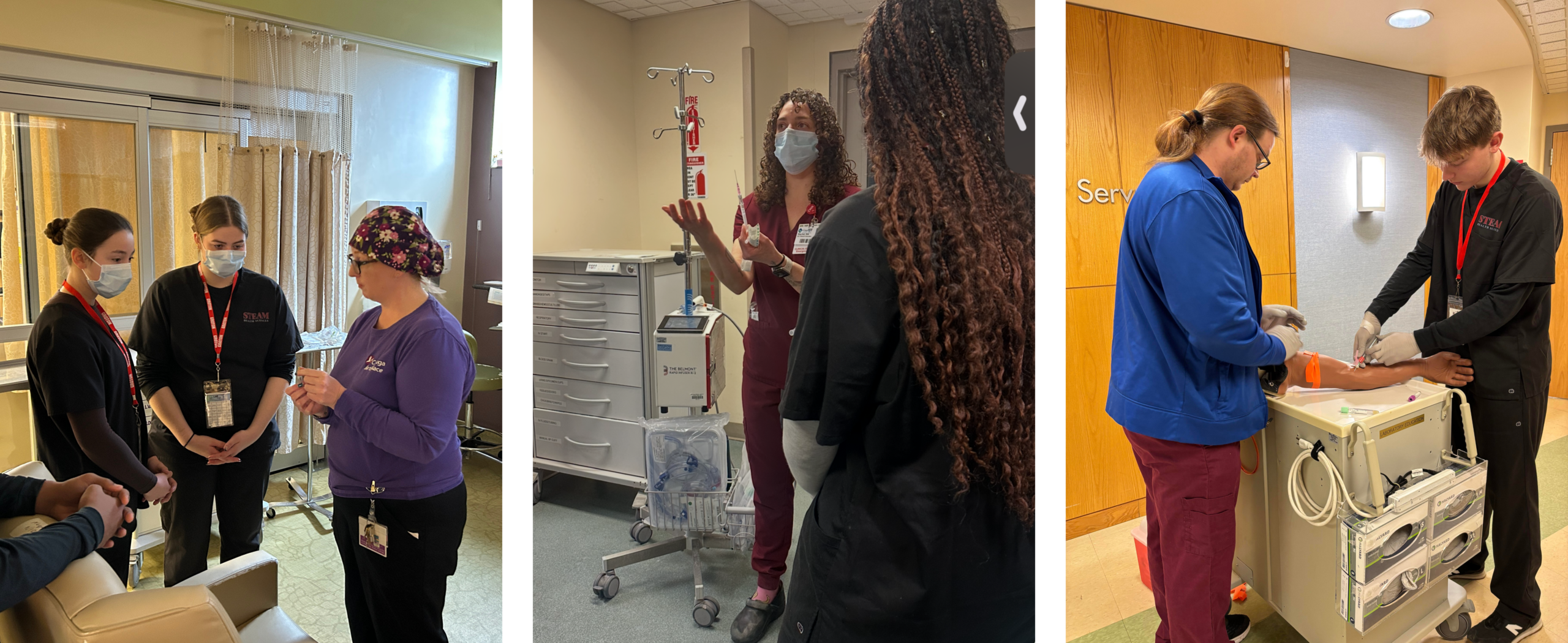
Students were divided into five collaborative groups that remained together throughout the year. Each group rotated through departments including Maternity, Laboratory, Pharmacy, Intensive Care Unit (ICU), Medical-Surgical (Med Surg), Wound Care Center, Emergency Department, Radiology, Surgical Short Stay, and Oncology/Infusion services, along with exposure to non-clinical areas that support hospital operations and patient experience.
This broad exposure aligns with consortium goals to expand awareness of the full spectrum of healthcare careers including diagnostic, pharmacy, laboratory, imaging, and administrative and support roles essential to care delivery.
Prior to each rotation, students completed structured preparation activities to strengthen engagement and professionalism. They researched departments, developed questions for staff, and worked in assigned roles such as Leader, Thanker, HIPAA/Safety Monitor, Note Summarizer, and Timekeeper. This reinforced communication, teamwork, accountability, and workplace readiness.
During their hospital experiences, students observed daily operations and engaged with professionals across multiple disciplines, gaining a clearer understanding of how clinical and non-clinical departments work together to support patient care, safety, and hospital efficiency.
These early exposures also align with students’ classroom learning and college coursework through the Health Sciences pathway. By the time students graduate from high school, they may earn up to 30 college credits toward a health sciences degree, creating a direct bridge between high school, college, and career.
Student reflections highlight the impact of the experience:
“Being able to observe medical professionals showed me what to really expect in the healthcare field. I valued seeing actual patients who were struggling get the care they needed and it has made me want to go into healthcare even more!”
— Stella Holl, Junior in the Health Sciences Program
“I didn’t originally think I would be interested in Imaging, but after shadowing in the department it was really interesting. There is a lot more that goes into it than I expected!”
— Makanzee Cain, Junior in the Health Sciences Program
Together, these experiences reflect the importance of investing in our communities through early hospital exposure, building career awareness, strengthening early college pathways, and supporting a sustainable regional healthcare workforce.
For more information on IHA’s HEC grant and related resources, you can visit: https://iroquois.org/iha-healthcare-education-consortium-hec/